
(Updated September 2026)
Medical device teams rarely struggle with the idea of validation. The harder problem is knowing whether the molding process was developed well enough to validate in the first place. If process development is rushed, validation becomes a documentation exercise around unstable conditions. If process development is data-driven, validation has a solid foundation.
This is the distinction that matters early. **Process development** is how you determine what the molding process should be. **Process validation** is how you document and confirm that the defined process performs consistently under controlled conditions. If you want a deeper explanation of validation phases and documentation, see our article on FAIR, IQ, OQ, and PQ.
For OEM engineers, this matters because supplier selection often happens before the first shot is molded. You need to know whether a molder has a disciplined path from print review to validated production, not whether they can produce one acceptable sample part.
1. Process Development vs. Process Validation
Process development and process validation support the same goal, but they are not the same activity.
Process development is the engineering work that establishes how the part should run. That includes material behavior, mold design inputs, fill patterns, cooling performance, gate location, pressure response, dimensional behavior, and the repeatable settings that produce acceptable parts.
Process validation begins after that groundwork is in place. Validation confirms that the process, equipment, tooling, materials, methods, and measurement systems are ready to perform within defined limits. In regulated programs, process validation is essential for ensuring that the documented process can hold quality over time, across operators, shifts, and production lots.
When these steps are blurred together, risk increases. A supplier may complete documentation, but still be relying on a narrow set of trial conditions that were never challenged enough to establish a defensible process window.
2. Defining Requirements Before Tooling Begins
A robust molding process starts long before steel is cut. The quality of the process is heavily influenced by the quality of the inputs you define at kickoff.
Before tooling begins, you should align on:
- part drawings and revision control
- resin selection, including grade, additives, and regulatory requirements
- critical dimensions and functional tolerances
- intended use of the component within the device or assembly
- annual volume expectations and ramp assumptions
- inspection requirements, sampling plans, and documentation needs
- packaging, traceability, and labeling expectations
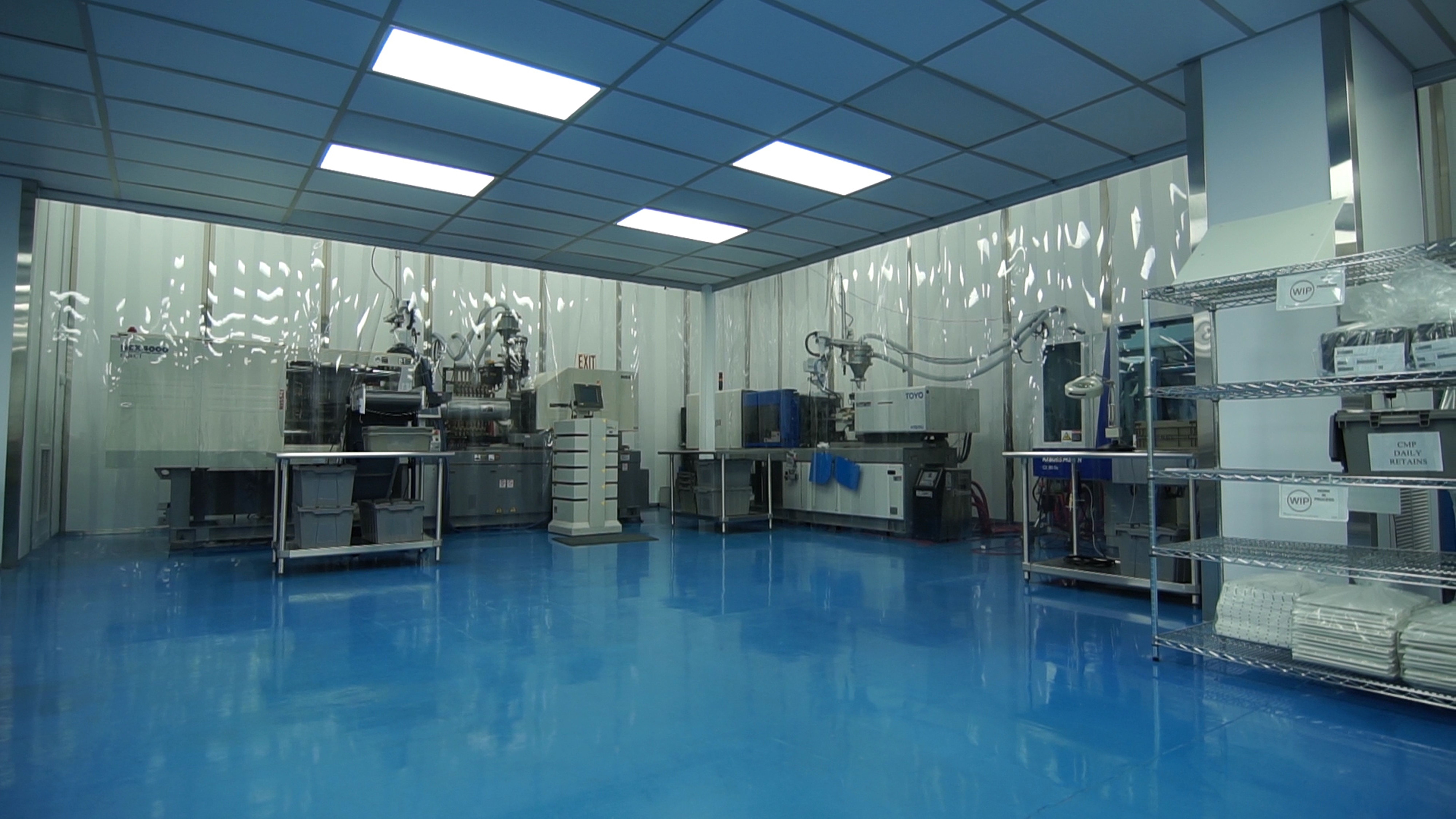
- cleanroom manufacturing needs, including whether an ISO class 7 environment or ISO class 8 environment is required
Each of these inputs affects the molding strategy. Resin choice influences shrink behavior, gating sensitivity, drying requirements, and dimensional stability. Annual volume influences cavitation, automation decisions, and tool steel selection. Inspection requirements influence datum strategy, fixturing, and measurement method development. Cleanroom manufacturing requirements influence material flow, handling procedures, and contamination controls.
This is also where a collaborative planning tool and a defined quality management system (QMS) become valuable. If project assumptions are scattered across emails and meetings, process risk tends to show up later in the form of tooling changes, late-stage dimensional issues, or avoidable validation delays.
3. Using DFM to Reduce Process Risk
Design for manufacturability (DFM) is one of the most effective ways to reduce technical and commercial risk before launch. It is not only a design review. It is a structured analysis of how part geometry, material selection, and tooling strategy interact under real processing conditions.
A strong DFM review should address:
- wall thickness consistency and transitions
- draft strategy for part release and cosmetic protection
- gate type, gate location, and expected vestige impact
- cooling path design and heat removal limitations
- material behavior, including shrink, flow length, shear sensitivity, and moisture control
- tolerance stack-up relative to resin and tool capability
- tool design details such as venting, parting line placement, steel-safe areas, shutoffs, and ejection strategy
Each of these details affects repeatability. Uneven wall sections can create sink, warp, or differential shrink. Limited draft can increase drag and cosmetic damage. Poor gate placement can change packing effectiveness and dimensional outcomes. Inadequate cooling can extend cycle time and widen variation. Tight tolerances may be achievable, but only when the design, material, and process are aligned.
This is where data-driven engineering becomes vital. Mold flow analysis, resin-specific processing guidance, and practical tool-building experience help identify issues before they become expensive tool modifications. DFM does not remove all risk, but it can reduce preventable risk significantly.
4. Developing the Initial Molding Process
Once tooling is available, the first goal is not speed. The first goal is understanding.
Initial process development should be built around disciplined sampling and observation. You need to understand how the cavity fills, where the process becomes pressure-controlled, how the material responds to temperature changes, what cooling time is required, and which settings influence dimensions and cosmetics most strongly.
This stage typically includes:
- short-shot or fill progression studies to understand fill behavior
- transfer point development based on actual cavity response
- evaluation of injection speed, pack pressure, hold time, and melt temperature
- cooling studies to determine stable part ejection and dimensional behavior
- review of part weight, visual defects, and dimensional repeatability
- documentation of the processing conditions that can be repeated consistently
The outcome should be more than a machine recipe. You are trying to establish repeatable processing conditions that connect machine inputs to part outputs. Scientific molding principles are especially useful here because they help separate assumptions from actual process behavior.
A supplier that relies only on trial-and-error adjustments may still find an acceptable part. That does not mean the process is understood well enough for long-term production.
5. Establishing a Defensible Process Window
One good sample part is not a process window.
A defensible process window defines the operating range where the process remains stable and acceptable as variables move within realistic limits. This is essential for ensuring that production does not depend on a single narrow setting combination that works only under ideal conditions.
To establish that window, you need to test boundaries deliberately. That may include evaluating the effects of variation in:
- fill speed
- transfer position or transfer pressure
- pack and hold conditions
- melt temperature
- mold temperature
- cooling time
- material lot behavior, when relevant
The objective is to identify where the part begins to drift dimensionally, cosmetically, or functionally. This gives you defined operating limits instead of relying on a nominal setup that has never been challenged.
For regulated medical programs, this distinction cannot be understated. If the acceptable output exists only at one narrow point, the process may be fragile in routine production. A molder should be able to explain not only the target settings, but also the logic behind the high and low boundaries that support process validation.
6. Measurement Readiness and Capability
A molding process cannot be considered production-ready if the measurement system is weak. You can only validate what you can measure reliably.
Measurement readiness should be reviewed alongside process development, not after validation planning begins. That review typically includes:
- identifying which dimensions and attributes require inspection
- confirming the inspection method for each critical feature
- assessing fixture strategy, datum repeatability, and operator influence
- determining whether a first article inspection report (FAIR) is required
- planning short-term capability studies where appropriate
- completing Gage R&R or other measurement system studies when required by the quality plan or customer specification
This work matters because false confidence in the inspection process can hide real process instability. If the measurement method has poor repeatability or high appraiser variation, capability results may be misleading. In that case, the issue may not be the molding process alone. It may be the inspection system used to judge it.
For medical programs, lot traceability, documented inspection methods, and aligned acceptance criteria are often just as vital as the molding study itself.
7. Determining Readiness for IQ/OQ
Before formal IQ/OQ activities begin, you should be able to verify that the program is ready. That does not require repeating every definition from process validation. It requires confirming that the foundational work is complete.
A practical readiness checklist includes:
- released drawings and approved specifications
- defined resin and approved material handling requirements
- completed DFM review with major risks addressed
- production-ready injection mold tooling and supporting equipment available
- documented baseline process with repeatable settings
- preliminary process window established from development work
- inspection methods defined and measurement reliability confirmed where required
- FAIR expectations understood and scheduled
- protocol inputs aligned across engineering, quality, tooling, and production
- cleanroom manufacturing controls defined when the part requires them
- training, forms, and document controls aligned within the quality management system (QMS)
If several of these items are still moving, IQ/OQ often becomes less efficient and more expensive. A delay at this stage is not always a failure. In many cases, it is a better decision than validating around incomplete process knowledge.
8. Questions OEM Engineers Should Ask Their Molder
If you are evaluating a supplier, the most useful questions are the ones that reveal how the process is developed before validation begins.
Consider asking:
1. **How do you separate process development from process validation in your project workflow?**
2. **What DFM inputs do you require before tooling design is finalized, and how do you document recommended changes?**
3. **How do you establish your initial process window, and which variables do you challenge before OQ begins?**
4. **What inspection and measurement studies do you complete before capability or validation results are accepted?**
5. **How do you determine whether a program requires cleanroom manufacturing, additional traceability, or expanded documentation?**
6. **If the first acceptable sample is dimensionally correct, what additional work do you perform before declaring the process ready for IQ/OQ?**
These questions help you evaluate more than technical competence. They show whether the supplier has a repeatable, data-driven approach that can support long-term production.
9. Process development sets the ceiling for validation success
Process validation is important, but validation quality is limited by the quality of the development work that comes before it. If requirements are incomplete, DFM is rushed, sampling is shallow, or measurement methods are not ready, validation becomes harder to defend and more expensive to repeat.
A better approach is to treat process development as the stage where risk is reduced methodically. That means defining requirements early, using design for manufacturability (DFM) to guide tooling decisions, developing repeatable processing conditions, challenging the process to establish a real operating window, and confirming measurement readiness before formal validation begins.
For medical device teams, that discipline supports a more stable launch. For molders, it creates a validated molding process built on evidence rather than assumptions. And for both sides, it leads to better decisions before production pressure starts to compress the timeline.
If you are reviewing a new medical molding program, we can work with you to evaluate requirements, tooling strategy, cleanroom manufacturing needs, and validation readiness before the project reaches production.